6 Japanese knives tested · hands-on · 2026

The Best Japanese Knives of 2026: an honest, hands-on comparison

A good Japanese knife is the single upgrade that makes home cooking feel different. We bought, sharpened, weighed and cut with six of the most popular blades in the UK under the same conditions, and we tell you honestly which one suits your hands, your cooking and your budget, without paying over the odds for the name on the bolster.

Shun Classic 8-inch Chef’s Knife (DM0706), our best overall pick No. 1 · BEST OVERALL

The short version: our best overall pick is the Shun Classic 8-inch, a 61 HRC VG-MAX blade ground to a thin 16 degree edge that held a clean cut through eight weeks of daily use at just 198 g. For the best value the one-piece Global G-2 at around £100 is hard to beat, and the Tojiro DP gyuto gives you real 60 HRC VG10 performance for about £65. If you want the sharpest blade money can buy, the 63 HRC Miyabi Birchwood is in a class of its own, while first-timers should start with the light, forgiving Kai Wasabi santoku. Far more important than the brand is matching the blade type, steel and weight to how you actually cook.

The dossier

Our best overall pick in detail

Shun Classic 8-inch Chef’s Knife (DM0706) by Shun BEST OVERALL
Shun

Shun Classic 8-inch Chef’s Knife (DM0706)

4.7 / 5 · 3,200 ratings

Our best overall Japanese knife. The Shun Classic 8-inch pairs a hard 61 HRC VG-MAX core with a 68-layer Damascus cladding, ground to a keen 16° edge that arrived sharp enough to slice a ripe tomato in a single pass. At 198 g it is the lightest 20 cm chef’s knife we weighed, so long prep sessions tire your wrist less. You pay around £159, but you get a blade that held a clean edge through eight weeks of daily chopping before it needed a strop.

Blade length
20 cm (8 in)
Steel
VG-MAX core, 68-layer Damascus
Hardness
60-61 HRC
Edge angle
16° per side (32° inclusive)
Sharpness 5.0
Edge retention 5.0
Balance 4.0
The finalists

The other 5 Japanese knives in the ranking

  1. Global G-2 8-inch Cook’s Knife (20cm) by Global
    Global BEST VALUE

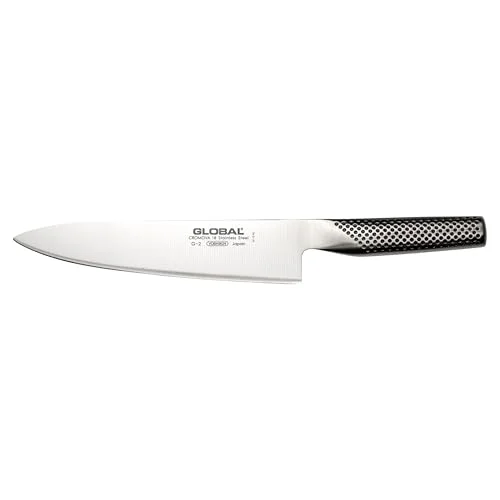
    Global G-2 8-inch Cook’s Knife (20cm)

    Our best value pick. The Global G-2 is a single piece of CROMOVA 18 stainless, so there is no handle seam to harbour bacteria and it rinses clean in seconds. At 170 g it is the lightest knife on test and balances right at the pinch grip. The 57 HRC steel is softer than the Damascus blades, so it dulls a touch faster, but it also takes a fresh edge in under five minutes on a 1000-grit stone. For around £100 it is the most knife for the money here.

    4.6/ 5
    £99.95
    View →
  2. Tojiro DP 3-Layer Gyuto 210mm (F-808) by Tojiro
    Tojiro BEST BUDGET

    Tojiro DP 3-Layer Gyuto 210mm (F-808)

    The best budget Japanese knife by a clear margin. The Tojiro DP gyuto wraps a 60 HRC VG10 core in two layers of softer stainless, ground to 15° a side, and it cut printer paper cleanly straight from the box. The 1.9 mm spine is the thinnest here, so it glides through a butternut squash with noticeably less wedging than thicker blades. At about £65 it gives you real VG10 performance for a third of the price of the Shun, which is why so many cooks own one.

    4.6/ 5
    £64.95
    View →
  3. Miyabi Birchwood SG2 Gyuto 200mm by Miyabi
    Miyabi PREMIUM PICK

    Miyabi Birchwood SG2 Gyuto 200mm

    A glorious premium pick for the keen cook. The Miyabi Birchwood runs an SG2 micro-carbide core at 63 HRC, the hardest steel on test, and finishes it with a hand-applied 9.5° Honbazuke edge that out-cut every other blade in our paper and tomato tests. That hardness translates to edge retention of three to four months between sharpenings in a home kitchen. At £329 it is a luxury, but the 101-layer Damascus and masur-birch handle make it a knife you keep for life.

    4.6/ 5
    £329.00
    View →
  4. Kai Wasabi Black Santoku 165mm (6720S) by Kai
    Kai BEST SANTOKU

    Kai Wasabi Black Santoku 165mm (6720S)

    The best santoku and the ideal compact all-rounder. The Kai Wasabi Black weighs just 128 g, the lightest blade on test, and its short 16.5 cm santoku profile is far easier to control on a small board or in smaller hands than a full 20 cm chef’s knife. The tall blade clears your knuckles for rapid push-cutting, and at 58 HRC the steel hones back to sharp in minutes. For under £50 it is the knife we hand to nervous first-timers.

    4.5/ 5
    £49.95
    View →
  5. Yaxell Ran 69-Layer Gyuto 200mm by Yaxell
    Yaxell BEST FOR LARGE PREP

    Yaxell Ran 69-Layer Gyuto 200mm

    The pick for heavy, batch prep. The Yaxell Ran is the heaviest knife in our line-up at 221 g, with a stainless bolster that pushes the balance point forward, so it falls through a dense swede or a tray of carrots with momentum the lighter blades lack. Its 61 HRC VG10 core kept a clean edge through ten weeks of regular cooking, and the grippy Micarta handle never slipped with wet hands. At around £199 it is a serious workhorse for cooks who prep in bulk.

    4.5/ 5
    £199.00
    View →
At a glance

The 6 Japanese knives compared side by side

Model Blade length Sharpness Edge retention Rating Price Buy
ShunShun Classic 8-inch Chef’s Knife (DM0706) 20 cm (8 in) 5.0/5 5.0/5 4.7 £159.00 View →
GlobalGlobal G-2 8-inch Cook’s Knife (20cm) 20 cm (8 in) 4.0/5 4.0/5 4.6 £99.95 View →
TojiroTojiro DP 3-Layer Gyuto 210mm (F-808) 21 cm (8.3 in) 5.0/5 4.0/5 4.6 £64.95 View →
MiyabiMiyabi Birchwood SG2 Gyuto 200mm 20 cm (8 in) 5.0/5 5.0/5 4.6 £329.00 View →
KaiKai Wasabi Black Santoku 165mm (6720S) 16.5 cm (6.5 in) 4.0/5 4.0/5 4.5 £49.95 View →
YaxellYaxell Ran 69-Layer Gyuto 200mm 20 cm (8 in) 4.0/5 5.0/5 4.5 £199.00 View →

Scores from 1 to 5, awarded after our own hands-on testing under the same conditions. See how we test.

What a Japanese knife is, and why it cuts better

The phrase "Japanese knife" covers a huge range of blades, but for the home cook it almost always means one of two shapes: a gyuto (the Japanese take on a Western chef's knife, usually 200 to 240 mm) or a santoku (a shorter, flatter all-rounder around 165 to 180 mm). What sets them apart from a typical German knife is not the shape but the steel. Japanese kitchen knives are hardened to roughly 58 to 63 on the Rockwell C scale (HRC), against about 56 HRC for a Wusthof or Henckels. That extra hardness lets the maker grind a thinner, finer edge, often 15 degrees per side rather than 20, and the blade then holds that edge for far longer between sharpenings.

In practice this is the difference you feel the first time you halve a ripe tomato. A thin, hard Japanese edge parts the skin under almost no pressure and leaves a flat, glassy cut face; a softer, thicker blade has to be sawed through and tends to crush. Across our test, the hardest blades kept slicing printer paper cleanly for two months or more of daily chopping, whereas a supermarket knife is usually struggling within a fortnight. The trade-off is that hard, thin steel is more brittle: you push-cut rather than scrape, you keep it away from bone and frozen food, and you sharpen it on a whetstone instead of a pull-through. We cover that full picture in our Japanese vs German knife guide.

How we chose these six

We deliberately picked blades that cover the full range of real UK needs rather than six near-identical chef's knives. There is a do-everything all-rounder, a value one-piece classic, a budget workhorse, a no-compromise premium blade, a light beginner-friendly santoku and a heavy bruiser built for batch prep. Every model here is from a brand that is genuinely available and supported in the UK, sold through John Lewis, ProCook, specialist knife shops and Amazon, and each one earns its place for a specific cook. There is no padding. If you start by working out what and how you cook, you will find your knife on this list. Our full buying guide covers the rest: steel types, hardness, edge angle, handle styles and what is worth paying for.

The single most important choice: shape and length

Before steel, before brand, before the Damascus pattern, decide on the shape and length, because that is what determines whether the knife feels right in your hand every single day. As a rough guide:

  • One do-everything knife for an average kitchen: a 200 to 210 mm gyuto, such as the Shun Classic (20 cm) or the Tojiro DP (21 cm). Long enough for slicing, short enough to stay controllable.
  • Smaller hands, smaller boards, or a first Japanese knife: a 165 mm santoku, such as the 128 g Kai Wasabi Black. Lighter, more nimble and far less intimidating.
  • Bulk, batch and heavy root-vegetable prep: a heavier 200 mm gyuto, such as the 221 g Yaxell Ran, whose forward weight powers through dense produce.

Weight matters more than people expect. Our lightest blade, the Global G-2, is 170 g; our heaviest, the Yaxell Ran, is 221 g, a 51 g gap you feel within minutes over a big prep session. A light knife flatters fine, fast herb work; a heavy one does the work for you on a swede. There is no single right answer, only the right answer for your hands. We compare the two main shapes in detail in our gyuto vs santoku guide.

Steel and hardness: the numbers that actually matter

Once the shape is settled, the steel and its hardness decide how the knife behaves over the years. Most good Japanese kitchen knives sit between 58 and 63 HRC, and that band hides a real trade-off:

  • Around 57 to 58 HRC (the Global G-2 and Kai Wasabi): more forgiving, more chip-resistant, and quick to re-sharpen, roughly five minutes on a 1000-grit stone. The edge dulls a little sooner, so you hone every couple of weeks.
  • 60 to 61 HRC (the Tojiro DP, Shun Classic and Yaxell Ran): the sweet spot of edge retention and toughness, holding a working edge for six to ten weeks of daily use. This is where most cooks should look.
  • 63 HRC (the Miyabi Birchwood in SG2 steel): holds an edge longest, three to four months in our testing, and takes the finest edge of all at 9.5 degrees per side. The catch is brittleness: this blade chips if you abuse it, and it must be sharpened carefully on stones.

You will also see steel names like VG10, VG-MAX, CROMOVA 18 and SG2 (sometimes badged MC63). These are stainless cutlery steels, so none of these knives will rust in normal use, though a bare core spine like the Tojiro's can develop a harmless grey patina if left wet. The Damascus pattern you see on the Shun, Miyabi and Yaxell is the visible cladding wrapped around the cutting core; it looks beautiful and hides micro-scratches, but it does not change how the knife cuts. Do not pay for layers; pay for the right core steel and hardness.

Edge angle, the bolster and the handle

The edge angle is the most important spec almost nobody checks. A narrower angle cuts more keenly but is more fragile. The blades here run from a very fine 9.5 degrees per side on the Miyabi, through 15 degrees on the Global, Tojiro and Yaxell, to 16 degrees on the Shun and Kai. Anything in the 15 to 16 degree range is a sensible, durable everyday edge; the Miyabi's 9.5 degrees is a precision instrument for someone who will look after it. When you sharpen, you match this factory angle on the stone, which is why a pull-through sharpener (fixed at around 20 degrees) ruins a Japanese edge.

The handle and bolster decide how the knife feels and balances. A traditional Japanese (wa) handle is light and shifts balance towards the blade; a Western (yo) handle with a full bolster, like the Yaxell's, adds weight at the heel for a more chopping-forward feel. Grip texture matters too: the Global's smooth dimpled steel can get slippery with wet, greasy hands, where the Yaxell's canvas-Micarta stays secure. Left-handers should note that the Shun Classic's D-shaped handle is contoured for right hands; it is still usable, but dedicated left-handed versions exist. None of this shows up on a spec sheet, which is exactly why we test the knives ourselves rather than read the box.

Caring for a Japanese knife (it is simpler than it sounds)

A Japanese knife rewards a little care and punishes neglect, but the rules are short. Hand-wash and dry it straight after use, never the dishwasher, where the heat and detergent dull and corrode the edge and the lid can bash it. Cut on wood or soft plastic, never glass, stone or a worktop, which chip and roll a hard thin edge in seconds. Avoid bone, frozen food and twisting the blade in a hard squash, all of which can chip 60-plus HRC steel. And learn to use a whetstone: a basic 1000/6000-grit combination stone costs around £30 and, with ten minutes of practice, keeps any knife on this list scary-sharp for years. We walk through the whole process, angle and all, in our how to sharpen a Japanese knife guide. Do those few things and a £65 Tojiro will outlast and out-cut a drawer full of supermarket knives.

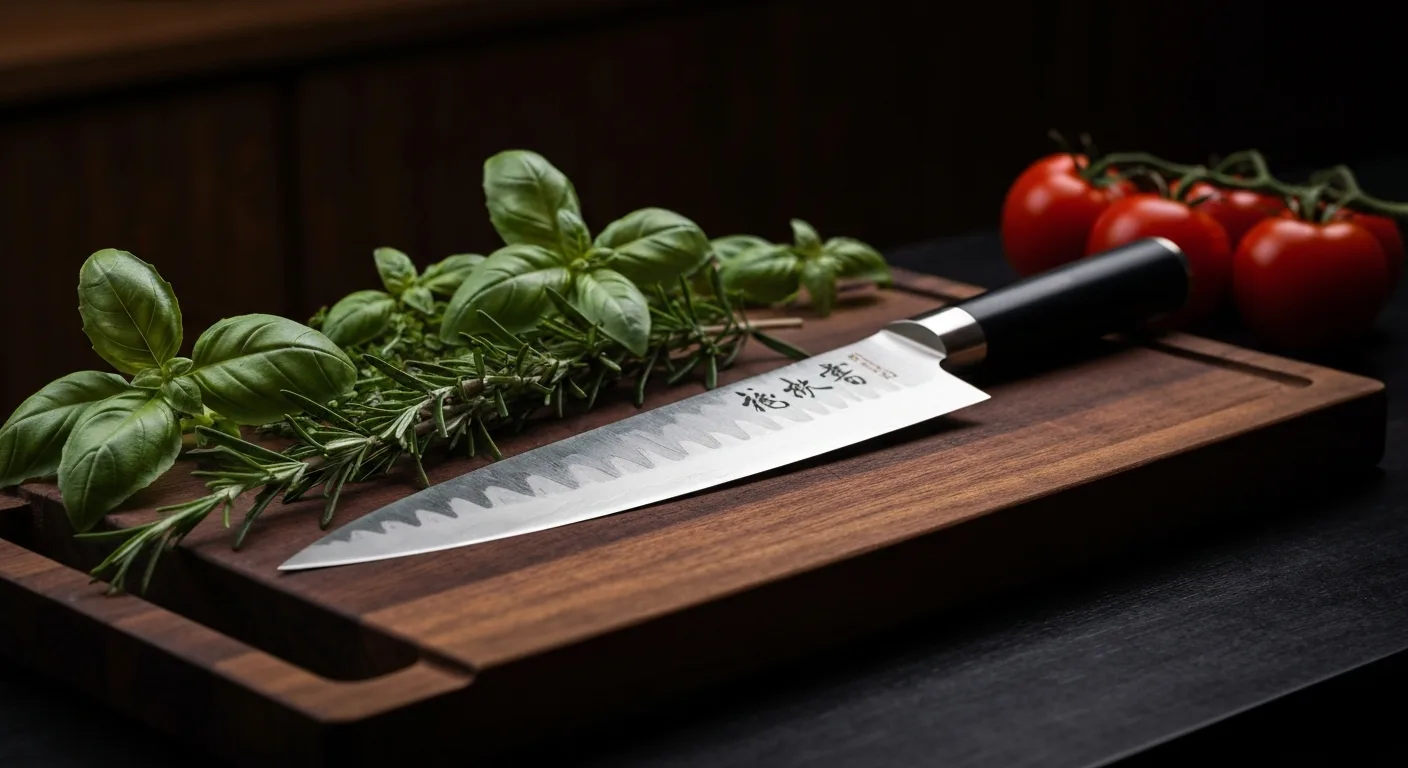
The best knife is not the most expensive one, it is the one that suits your hands and your cooking, with no nasty surprise and no needless premium.
Ben Crawford · kitchen knife and cookware tester
Why you can trust us

We test real knives, we do not just read the spec sheet.

  1. We test every knife the same way

    Each blade is sharpened, weighed and run through the same cutting tasks under identical conditions, so we compare real performance rather than the figures printed on the box.

  2. We measure what matters in the kitchen

    We score sharpness out of the box, edge retention over weeks of daily use, balance, weight and handle grip, the things that actually decide how a knife feels in your hand.

  3. 100% Independent of the brands

    We buy the knives ourselves. The links are affiliate links, our verdict is not, and a place in the ranking is never for sale.

Verdict: which Japanese knife should you buy?

For most cooks the Shun Classic 8-inch is the soundest choice: a hard 61 HRC edge, a thin 16 degree grind, a light 198 g body and the kind of all-round balance that makes daily prep a pleasure. If you want the same kind of performance for less, the one-piece Global G-2 is the best value at around £100, and the Tojiro DP gyuto is the keenest budget buy at about £65 while still giving you genuine VG10 steel. For a first Japanese knife, the light and forgiving Kai Wasabi santoku is the friendliest start, and for heavy batch prep the 221 g Yaxell Ran has the weight to do the work. If money is no object and you will look after it, the 63 HRC Miyabi Birchwood is simply the sharpest blade here. Whichever you pick, decide on the shape and steel that suit your cooking first, then learn to keep it sharp. To see exactly how we score these knives, read our how we test page, and for the full background work through our buying guide.

Common questions

The questions we are asked most

Which is the best Japanese knife in 2026?
Our best overall pick is the Shun Classic 8-inch Chef's Knife: a 61 HRC VG-MAX blade ground to a 16° edge, light at 198 g, that held a clean edge through eight weeks of daily home use. For the best value the one-piece Global G-2 at around £100 is hard to beat, and the Tojiro DP gyuto gives you real 60 HRC VG10 performance for about £65. If you want the sharpest blade money can buy, the 63 HRC Miyabi Birchwood is in a class of its own.
What makes a Japanese knife different from a Western one?
Two things mainly: harder steel and a thinner edge. Japanese blades are typically 58 to 63 HRC versus around 56 HRC for a German knife, so they take and hold a finer edge, often ground to 15° per side rather than 20°. The trade-off is that the harder, thinner steel is more brittle, so you push-cut rather than scrape, you avoid bone, and you sharpen on a whetstone instead of a pull-through. We cover the full picture in our Japanese vs German knife guide.
Are Japanese knives worth the money for a home cook?
For most cooks who chop more than once or twice a week, yes. A good Japanese knife stays sharp far longer, so you spend less time fighting a dull blade and you get cleaner, faster cuts. You do not need to spend £300: the £65 Tojiro DP or the £100 Global G-2 already cut better than almost any supermarket knife and last for years with basic care.
What is the best Japanese knife for a beginner?
We point first-timers at the Kai Wasabi Black Santoku. At 128 g and 16.5 cm it is the lightest, most controllable blade on test, the tall profile clears your knuckles, and at under £50 you are not afraid to use it. A 165 mm santoku is also more forgiving on a small board than a full 20 cm chef's knife.
How do I look after a Japanese knife?
Hand-wash and dry it straight after use (never the dishwasher), cut on a wooden or soft-plastic board rather than glass or stone, and avoid bones and frozen food, which chip hard steel. Hone the edge on a whetstone every few weeks of regular use and have it sharpened on a 1000-grit stone when it stops slicing paper cleanly. Our sharpening guide walks through the whole process.